A hotel renovation isn’t a design project.
It’s an operating model under pressure.
Hotel Renovation — London
It’s not a design problem. It’s a sequencing problem. Here’s the framework that actually protects revenue, reputation, and longevity.
Walk into any London hotel that’s recently been renovated and you can usually tell within thirty seconds whether it worked. Not because the finishes are beautiful — they often are. But because it either feels resolved, or it doesn’t.
Most refurbishments fail in a predictable way: they start with aesthetics. New surfaces. New furniture. A new “feel.” The property looks updated, but performance doesn’t move. Reviews stay flat. Rates don’t hold. Maintenance increases. The concept deck was strong. The execution was disciplined. And yet.
The problem isn’t the design. It’s the order of decisions.
London is not a forgiving environment
Guests in London benchmark you against Mayfair efficiency, Knightsbridge quiet, Chelsea confidence. The margin for error is smaller than almost anywhere else. And yet you’re renovating inside a set of constraints that most other markets simply don’t have: trading pressure that doesn’t pause for contractors, building complexity from older stock with hidden conditions, neighbour sensitivity, and the particular problem of guests forming strong opinions in real time.
This is why “refresh” language is dangerous. A hotel doesn’t need a refresh. It needs a controlled upgrade to how it performs.
Start with outcomes. Not aesthetics. The concept without commercial intent becomes taste — and taste doesn’t hold up under budget pressure.
Define the outcome in commercial terms first
Before a single finish is discussed, a hotel renovation should answer four questions clearly:
What has to change in ADR and occupancy? Which reviews are you specifically trying to fix — noise, lighting, bathrooms, check-in friction? Where is the property losing money through maintenance cycles, housekeeping time, or inefficient back-of-house flow? And who, precisely, is the guest you’re designing for?
Without these anchors, a renovation becomes an exercise in taste. Beautiful, possibly. But commercially undirected.
Guest journey is revenue, not branding
“Guest journey” is often treated like marketing language. It isn’t. It’s the sequence of transitions that determines how a hotel feels before the guest has consciously decided what to think.
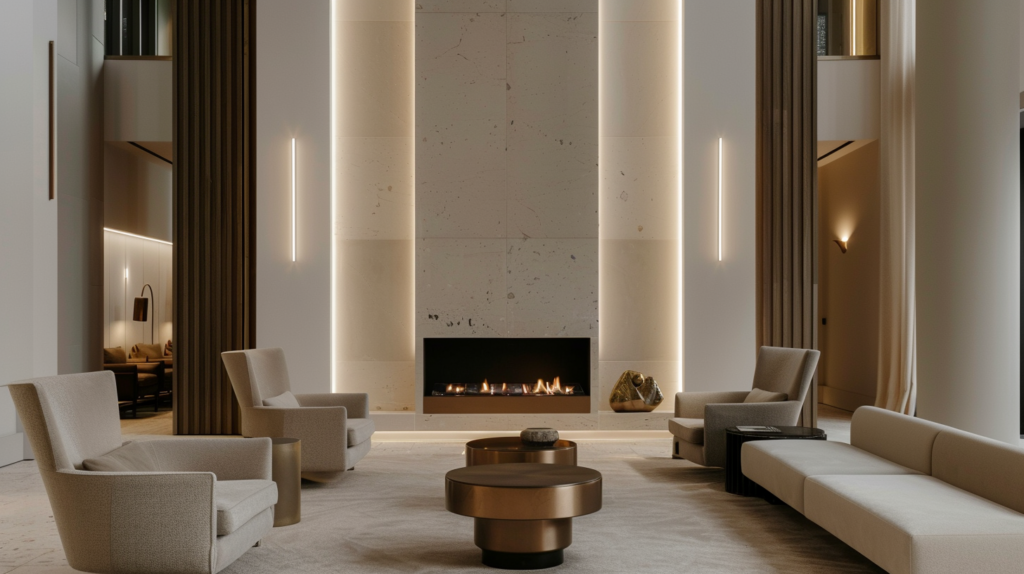
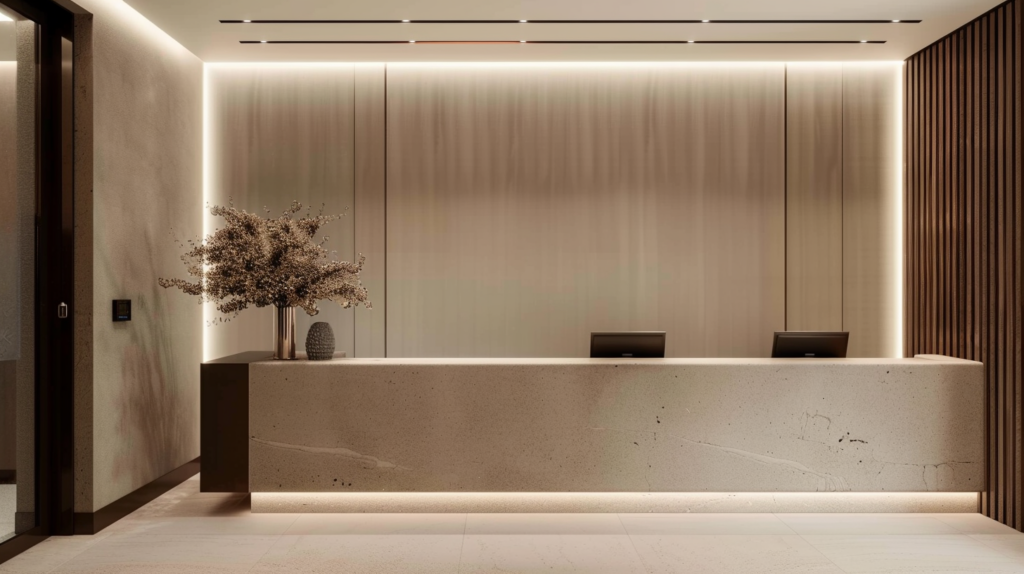
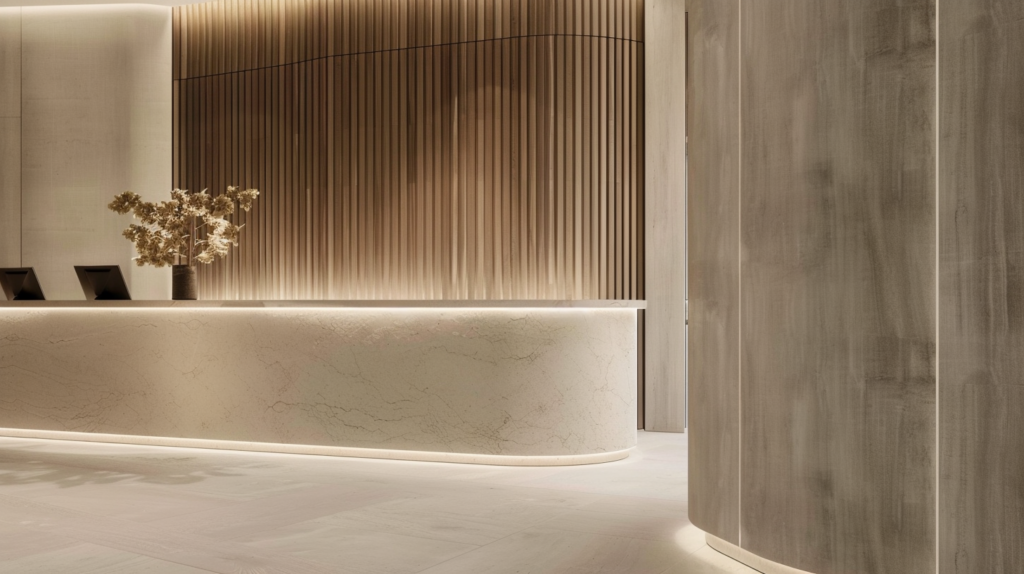
The moments that matter most are rarely the showpiece ones. They’re the threshold from street to entrance. The clarity — or confusion — between entrance and reception. Whether corridor lighting feels intentional or accidental. Whether a room works in low light, with luggage, after a long flight.
Hotels don’t need more moments. They need fewer frictions.
Flow and zoning: the quiet driver of profit
A typical London lobby has to do too much at once: arrival, waiting, informal meetings, working, bar and restaurant overspill, events, staff movement, deliveries. The solution isn’t to add more. It’s to organise what’s already there.
Strong zoning creates a clear hierarchy where arrival reads first. It protects sightlines so guests see order, not operational mess. It separates service routes from guest experience. It designs for peak-capacity moments — check-in rush, breakfast pressure — not quiet midday. Most interiors look expensive. Very few are valuable. Value comes from structure.
Services coordination: the most expensive thing to get wrong
Hotels are services-heavy buildings. That’s exactly why late coordination is so costly. The failure pattern repeats across projects: visual concept is approved, services coordination happens later, ceilings drop, lighting changes, details are compromised, and the delivered space feels “not quite like the render.”
Early coordination means HVAC distribution and night-mode noise resolved before ceiling heights are fixed. Fire strategy implications understood before corridor widths are set. Lighting layers, emergency integration, and glare control treated as design inputs, not late-stage additions. Power and data positioned where guests actually use them, not where it was convenient to route.
Compliance is a design input, not a phase
Hospitality carries specific risks — sleeping occupants, evacuation strategy, corridor protection, materials performance. Late compliance discoveries are rarely small changes. They’re programme and cost events. The goal isn’t to turn a renovation into a regulation exercise. It’s to have a process where compliance informs the design early, so it doesn’t rewrite the layout late.
Durability is part of the brand
Hotels are high-frequency environments. Luggage hits corners. Cleaning chemicals hit surfaces daily. Chairs scrape floors hundreds of times a week. Wet zones fail quietly until they fail publicly. Durability isn’t a compromise. It’s the standard.
The guest may never know why a space feels “sharp.” They feel it anyway. Thresholds and transitions are the first place wear shows. Bathroom detailing — waterproofing, seals, ventilation — fails quietly before it fails visibly. Joinery edges and handles are touchpoints, and touchpoints fail first.
Lighting and acoustics move reviews faster than anything else
Guests rarely write: “Your acoustic strategy was poor.” They write: I couldn’t sleep. Guests rarely write: “Your glare control failed.” They write: The room felt harsh.
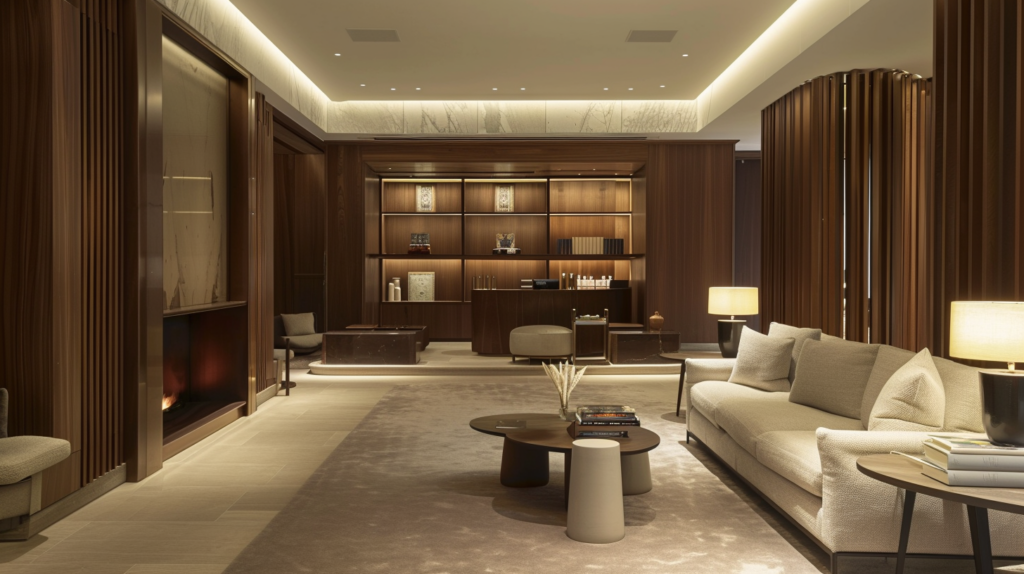
Corridor noise and door seals. Room-to-room transfer. HVAC noise at night settings. Bedside lighting that doesn’t illuminate the whole space. Lobby lighting that flatters faces and reads as calm. These are not styling decisions. They’re comfort engineering.
Phasing: the difference between managed disruption and brand damage
Some projects should close. Many can’t. If you’re trading through works, phasing is the variable that separates “managed disruption” from reputational damage. Strong phasing sequences by floor or wing. It has a noise and dust containment strategy that is actually enforceable on site. It maintains temporary standards that still read as intentional. And it ties programme decisions to occupancy patterns, not just contractor convenience. A renovation should protect cash flow. Not punish it.
Most renovation failures are not creative failures. They’re decision failures — the wrong things decided in the wrong order.
The mistakes that keep repeating
Starting with aesthetics instead of commercial outcomes
Approving design before services are coordinated
Underestimating unknowns in existing building conditions
Choosing finishes that can’t take hotel wear
Weak phasing that compromises the guest experience
Unclear accountability between design intent and build execution
A single scope closes the gap
Renovation risk often sits between parties: designer, contractor, consultant, supplier, operator. When design and construction are split, detail suffers first. Then programme. Then budget. Delivering interior design and construction as a single coordinated scope means earlier technical coordination, clearer accountability on site, fewer compromises between intent and buildability, and tighter control of quality, cost, and phasing.
A hotel renovation in London is not won by a stronger concept deck. It’s won by disciplined sequencing and a clear standard of execution. Start with outcomes. Coordinate services early. Specify for durability. Design for sleep, comfort, and calm.
Ready to renovate the right way?
Accanto delivers interior design and construction as one coordinated scope — designed to perform, with every detail having a reason.